Sauna Benefits for Women: How Often, How Hot, and How Long to Sit
Quick Answer: The sweet spot from the research: 15-20 minutes at 160-195°F (traditional sauna), 3-4 times a week. That frequency is where the famous Finnish studies found the biggest drops in cardiovascular risk. Hydrate before and after, and skip alcohol entirely.
Somewhere between the gym locker room and the $80-a-session ‘heat studio,’ the sauna became wellness real estate. But the habit itself is ancient, cheap where you can find it, and — unusually for a wellness trend — backed by some genuinely impressive long-term data. Here’s what the heat actually does, and the protocol that captures it.

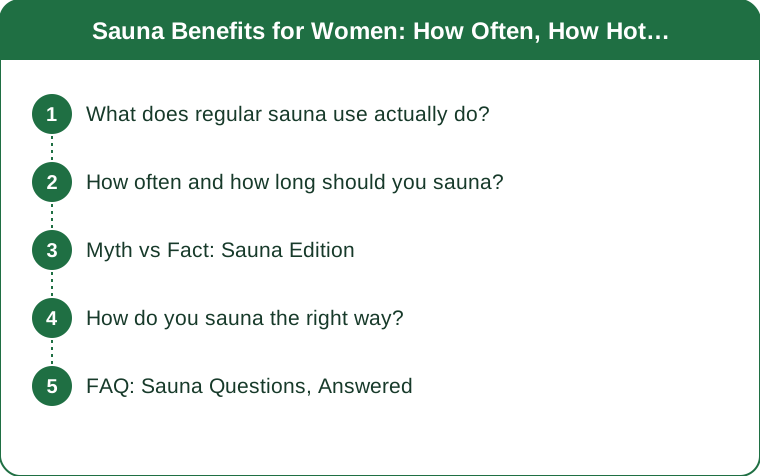
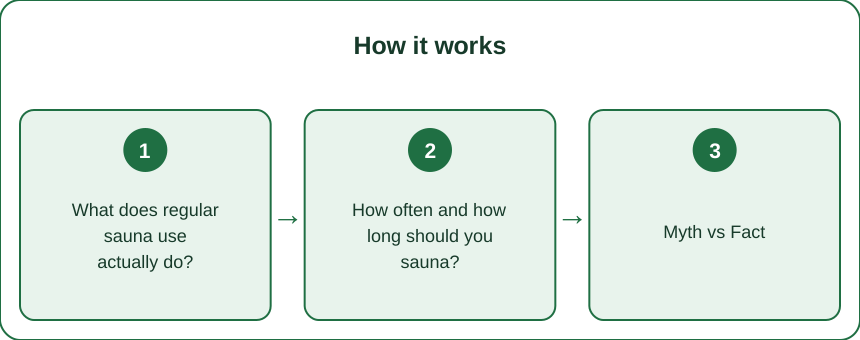
What does regular sauna use actually do?
The headline data comes from Finland, where researchers followed 2,300 men for 20+ years: those using a sauna 4-7 times a week had a 40% lower all-cause mortality rate than once-a-week users. Observational, male cohort, healthy-user caveats — but the dose-response pattern (more sessions, more benefit) is hard to dismiss.
Mechanistically, a sauna session is a passive cardio workout: your heart rate climbs to 100-150 bpm, blood vessels dilate, and plasma volume expands — adaptations that overlap with moderate exercise.
For women specifically: regular heat exposure is linked to better vascular function, potential heat-shock-protein benefits for muscle recovery, and — anecdotally but very consistently — better sleep on sauna days. It’s recovery you do sitting down.
How often and how long should you sauna?
The protocol that mirrors the research: 15-20 minutes per session, 160-195°F, 3-4 sessions a week. Under 160°F, you’re in warm-room territory; the Finnish data centers on real heat.
Beginners: start with 5-10 minutes at the lower end and build over 2-3 weeks. Getting out early isn’t failure — heat tolerance is trainable, exactly like cardio.
Infrared saunas run cooler (110-140°F) so sessions stretch to 25-40 minutes for a comparable sweat. The long-term outcome data is thinner for infrared, but the relaxation and recovery effects show up there too. Use whichever one you’ll actually use.
Myth vs Fact: Sauna Edition
Myth: The sauna detoxes your body. Fact: Your liver and kidneys detox your body. Sweat is 99% water and electrolytes. The sauna does plenty — detox isn’t on the list.
Myth: A sauna session burns serious calories. Fact: You’ll burn maybe 25-75 extra calories and lose water weight you should immediately drink back. The scale drop is borrowed, not earned.
Myth: Sweating more means it’s working better. Fact: Sweat volume tracks genetics, hydration, and humidity — not benefit. The adaptations come from heat stress and elevated heart rate, not from how drenched your towel is.
Myth: Sauna after every workout, no exceptions. Fact: It’s a genuinely great post-workout habit — but on your hardest lifting days, extreme heat right after may add stress when your body wants recovery resources elsewhere. On those days, keep it short or save it for the evening.
How do you sauna the right way?
The session flow: hydrate 16-20 oz before, shower, sit on a towel (etiquette and hygiene), start your timer, and get out when you hit time or feel lightheaded — whichever comes first. Cool down 5-10 minutes, then rehydrate with electrolytes.
The skin bonus: the heat-and-sweat cycle increases circulation, and most women notice a post-sauna glow that lasts hours. Rinse promptly afterward so the sweat doesn’t sit.
Who should check with a doctor first: anyone pregnant (heat exposure limits matter — this one’s firm), anyone with cardiovascular conditions or on blood-pressure medication, and anyone prone to fainting. Alcohol and sauna is a genuinely dangerous combination — the Finnish data on sauna injuries is basically a list of people who brought a drink in. Don’t.
FAQ: Sauna Questions, Answered
Is sauna better before or after a workout?
After, for most goals — muscles are warm, the relaxation lands better, and post-exercise heat may extend the recovery window. Before, keep it to 5-10 minutes as a warm-up assist, not a session.
Sauna or cold plunge — which should I pick?
Different tools: heat relaxes, dilates, and aids recovery volume; cold alerts, constricts, and trains stress response. If you’re choosing one for longevity data, the sauna currently has the deeper evidence. Many people alternate — heat on rest days, cold on energized mornings.
Does the sauna help with period cramps?
Heat is one of the best-evidenced comfort measures for cramps, and many women find a 15-minute sauna genuinely helps. Hydrate extra — you’re already losing more fluid that week.
TL;DR:
- 15-20 min, 160-195°F, 3-4x a week — the dose from the best long-term data
- It’s passive cardio: heart rate 100-150 bpm while you sit still
- Detox and calorie claims are myths; recovery, vascular, and sleep benefits are real
- Hydrate before and after; never drink alcohol in the heat; pregnant women need a doctor’s guidance
The sauna asks for 20 minutes and gives back better sleep, looser muscles, and two decades of encouraging data. Fair trade.
Keep Reading
This article is for general informational purposes only and is not medical advice. Always consult a qualified health professional for guidance specific to you.