Why the Exact Same Sauna Session Feels Completely Different Depending on the Season
Quick Answer: The same sauna temperature and duration can feel noticeably more intense in summer than winter, largely because summer’s higher ambient heat means the body is often starting the session already somewhat heat-loaded and less able to cool down efficiently between and after rounds, while winter’s colder outside air provides a bigger contrast that actually makes recovery between rounds feel more effective.
A sauna session doesn’t happen in isolation from the temperature and hydration state you bring into it, which is exactly why identical settings feel so different depending on the time of year.
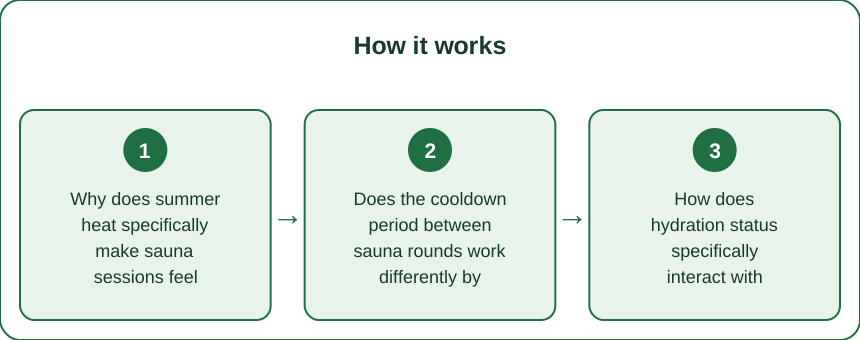
Why does summer heat specifically make sauna sessions feel more intense?
During summer, the body is frequently already managing some degree of heat load and mild dehydration from daily outdoor temperature exposure before even entering the sauna, meaning there’s less physiological ‘buffer’ available to absorb the sauna’s additional heat stress compared to winter, when the body starts from a cooler, less heat-taxed baseline.
Does the cooldown period between sauna rounds work differently by season?
Yes, meaningfully — stepping into cold winter air or a cool shower between rounds provides a much sharper temperature contrast that helps core temperature drop more efficiently before the next round, while stepping into warm summer air offers a smaller temperature gradient, meaning the body doesn’t cool down as completely between rounds even with the same rest interval.
How does hydration status specifically interact with this seasonal difference?
People are more prone to mild, unnoticed dehydration in summer from general daily heat exposure and sweating, and starting a sauna session already somewhat dehydrated significantly reduces heat tolerance and increases how intense the same session feels, which compounds with the reduced cooldown efficiency to make summer sessions feel disproportionately harder than the thermostat setting alone would suggest.
What Nobody Tells You About Winter’s Deceptive Ease
Winter sauna sessions can feel so comfortably intense, thanks to that sharp cold-to-hot contrast and a well-hydrated starting baseline, that it becomes easy to push session length or frequency further than would feel sustainable in summer, without necessarily adjusting expectations when summer arrives. This sets up a common pattern where someone builds a winter tolerance for a certain session length, then feels confused or discouraged when the identical routine feels much harder come summer — the body’s actual thermal capacity for that session may not have changed much, but the surrounding conditions asking more of it definitely have.
Is there a reasonable way to adjust sauna practice by season?
Prioritizing hydration more deliberately in summer before and during sauna use, allowing for slightly shorter sessions or longer cooldown periods between rounds during hot months, and not assuming a winter-built tolerance transfers directly and unchanged into summer conditions all help align expectations with what the body can actually comfortably manage.
FAQ: Seasonal Sauna Tolerance Questions, Answered
Should sauna temperature itself be lowered in summer to compensate?
Some people find this helpful, though adjusting session length and hydration first is often a more effective and simpler starting adjustment than changing the sauna’s actual temperature setting.
Does this seasonal difference apply to infrared saunas the same way as traditional ones?
Yes, broadly — while the heating mechanism differs, the underlying factors (starting body temperature, hydration status, cooldown efficiency) apply similarly regardless of sauna type.
Is it normal to need noticeably more recovery time after a summer sauna session compared to winter?
Yes — reduced cooldown efficiency and higher starting heat load in summer commonly translate to needing more time to feel fully recovered afterward, which is a normal seasonal pattern rather than a sign of declining heat tolerance.
TL;DR:
- Summer heat load and mild daily dehydration reduce available buffer for sauna heat stress
- Cooldown between rounds is less effective in summer due to a smaller outside-to-inside temperature gradient
- Hydration status compounds with reduced cooldown to make summer sessions feel disproportionately harder
- A winter-built tolerance doesn’t automatically transfer unchanged into summer conditions
- Prioritizing hydration and allowing shorter sessions in summer keeps expectations realistic
This is general information, not medical advice — anyone with cardiovascular conditions should check with a doctor before regular sauna use, especially across seasonal extremes.
Keep Reading
This article is for general informational purposes only and is not medical advice. Always consult a qualified health professional for guidance specific to you.