Why the Cool Down Does More Than the Heat Itself
Quick Answer: The heat phase is the stressor; the cool-down is where the physiological response actually plays out. Cooling drives the shift from sympathetic to parasympathetic dominance, allows heart rate and core temperature to normalise, and produces most of the calm and improved sleep people attribute to the sauna itself. Cutting the cool-down short - or skipping it entirely by going straight back in - reduces the benefit and increases the strain. The ratio matters as much as the duration.
Here is what the cooling phase does and how to structure it.
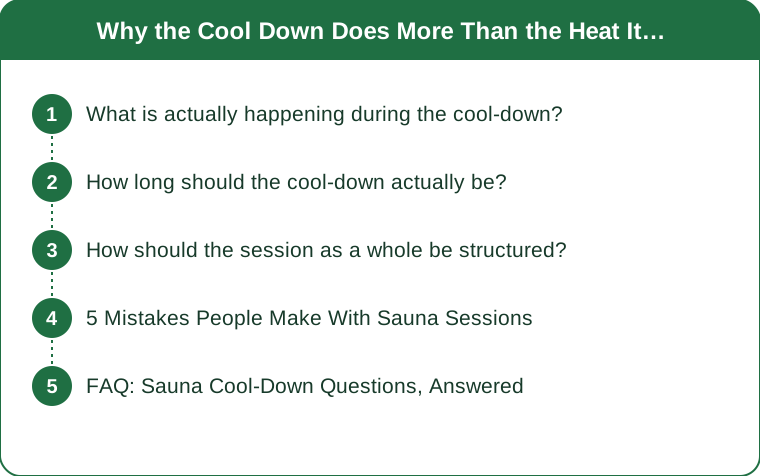
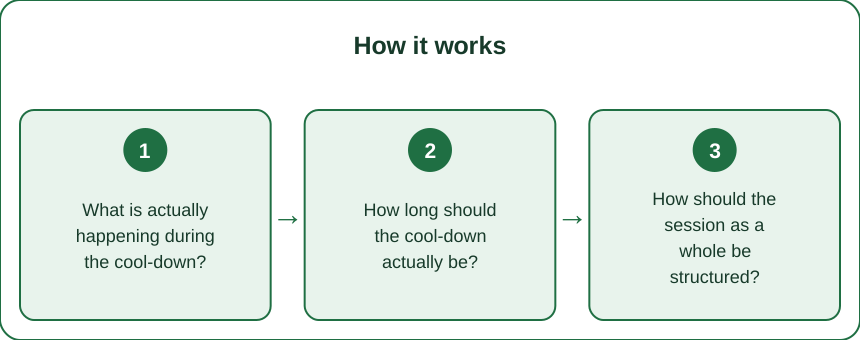
What is actually happening during the cool-down?
Several processes, all of which need time rather than intensity.
Core temperature keeps rising briefly after you leave the heat. Heat stored in your tissues continues to redistribute, so the peak is often a couple of minutes after exiting rather than at the moment you step out. Getting back in immediately means starting the next round from a higher baseline than you think.
Cardiovascular load unwinds gradually. Heart rate is elevated in the sauna as your body moves blood to the skin for cooling. Returning to baseline takes several minutes, and starting a new round before that means accumulating load rather than repeating a stimulus.
The autonomic shift happens here. The parasympathetic rebound after heat exposure - the deep calm people describe - occurs during cooling, not during heating. Skip the cooling and you skip the part you came for.
Sweating continues after you leave. Fluid loss carries on for several minutes, which is why rehydration belongs in the cool-down phase rather than only at the end of the session.
And the skin’s blood flow normalises slowly. Standing up too quickly during this window is when people feel light-headed, because a large volume of blood is still near the skin and has not yet been redistributed.
How long should the cool-down actually be?
Roughly as long as the heat phase, and there are clear signals for it.
A common structure is a cool-down at least as long as the sauna round - so 10 to 15 minutes of heat followed by 10 to 15 minutes of cooling. Many traditional practices use a longer cooling phase than heating phase, which is the opposite of what most gym sauna users do.
Use signals rather than a timer alone. You are ready for another round when your heart rate has settled, you have stopped actively sweating, and your skin feels cool to the touch. All three, not one.
Do not rush to the cold plunge if you use one. Brief cold immersion is fine for many people, but going straight from maximum heat into cold is a significant cardiovascular demand, and a short pause in ambient air first is the gentler sequence.
Ambient air cooling is sufficient. Cold water is not required for the benefit - sitting in a cool room does the job, and traditional practice often uses exactly that.
Drink during the cool-down, not only afterwards. Fluid and electrolyte replacement across the session is more effective than a large volume at the end.
And lie down or sit rather than standing. The lightheadedness people experience is a blood distribution effect, and it is easily avoided by not being upright in the first few minutes.
How should the session as a whole be structured?
Rounds, ratios, and a defined end, which most casual users do not have.
Two to three rounds is a typical structure, with the total time in heat commonly in the range of 20 to 45 minutes across the session for regular users - and considerably less when starting out.
Start conservatively if you are new. A single round of 5 to 10 minutes with a full cool-down is a complete session when you are beginning, and the adaptation to heat tolerance builds over weeks.
Later rounds should be shorter, not longer. Heat load accumulates across the session, so a third round at the same duration as the first is a bigger stressor even though the clock says otherwise.
End with a full cool-down, not a rushed exit. The last cooling phase is what determines how you feel for the following hours, and it is the one people consistently cut short to get dressed and leave.
Timing relative to sleep matters. A sauna a couple of hours before bed can support sleep, because the subsequent drop in core temperature aligns with the body’s natural pre-sleep cooling. Immediately before bed, with core temperature still elevated, is less helpful.
And timing relative to training matters too. After a hard session, sauna adds cardiovascular and thermal load to an already stressed system. Separating them by a few hours, or using the sauna on easier days, is the gentler approach - and it becomes more relevant as training volume rises.
This is general information, not medical advice. Sauna use is not appropriate for everyone. If you are pregnant, have cardiovascular disease, low or unstable blood pressure, or any condition affecting heat tolerance or sweating - or you take medication affecting blood pressure or fluid balance - speak to a healthcare professional before using a sauna. Do not use a sauna after drinking alcohol, and leave immediately if you feel dizzy, nauseous, or unwell.
5 Mistakes People Make With Sauna Sessions
1. Going straight back in. The most common error, and it means starting the next round from an elevated baseline. You are accumulating load, not repeating a stimulus.
2. Rushing the final cool-down. Getting dressed while still sweating leaves you uncomfortable for the next hour and skips the parasympathetic rebound entirely - which is the part most people are actually there for.
3. Drinking only at the end. Fluid loss happens throughout and continues after you exit. Spreading intake across the session is more effective, and electrolytes matter for longer sessions.
4. Standing up immediately after a round. Blood is still pooled near the skin. Sitting for a minute before standing prevents the light-headedness that people misinterpret as having overdone the heat.
5. Making later rounds as long as the first. Heat load accumulates, so equal rounds are not equal stressors. Shortening later rounds is the correct adjustment, not a sign of weakness.
And the one that surprises people: your tolerance genuinely changes across the week and across the year. Poor sleep, alcohol the night before, dehydration, a hard training session, and cycle phase all reduce it - and as the weather cools, starting from a colder baseline means the same round feels different. Judging by how you feel rather than by your usual number is the whole skill.
FAQ: Sauna Cool-Down Questions, Answered
How long should I cool down between sauna rounds?
At least as long as the round itself, often longer. You are ready when your heart rate has settled, you have stopped actively sweating, and your skin feels cool.
Do I need a cold plunge?
No. Cooling in ambient air is sufficient and is what traditional practice often uses. If you do use cold, pause briefly in air first rather than going straight from maximum heat.
Why do I feel dizzy when I stand up after the sauna?
Because a large volume of blood is still near your skin and has not redistributed. Sit for a minute before standing, and rehydrate during the cool-down rather than after.
How many rounds should I do?
Two to three for regular users, with later rounds shorter than earlier ones. One round of 5 to 10 minutes is a complete session when you are starting out.
When is the best time to use a sauna relative to sleep?
A couple of hours before bed tends to work well, because the subsequent drop in core temperature aligns with your natural pre-sleep cooling. Immediately before bed is less helpful.
Should I sauna after a hard workout?
It adds cardiovascular and thermal load to an already stressed system. Separating them by a few hours, or saving the sauna for easier days, is the gentler approach.
TL;DR:
- The heat is the stressor; the cool-down is where the response happens - including the parasympathetic rebound you came for.
- Core temperature keeps rising for a couple of minutes after you exit, so going straight back in starts from a higher baseline.
- Cool down at least as long as the round, and judge by three signals: settled heart rate, sweating stopped, skin cool.
- Ambient air is enough - a cold plunge is optional, and going straight from maximum heat into cold is a real cardiovascular demand.
- Drink during the session, not only at the end, and sit for a minute before standing.
- Make later rounds shorter - heat load accumulates, so equal rounds are not equal stressors.
- A sauna a couple of hours before bed supports sleep better than one immediately before it.
Tolerance moves with sleep, hydration, training, and the season. Judge by how you feel, not by your usual number.
This is general information, not medical advice - sauna use is not appropriate for everyone.
Keep Reading
This article is for general informational purposes only and is not medical advice. Always consult a qualified health professional for guidance specific to you.