Why the Ten Minutes After a Sauna Matter More Than the Session Itself
Quick Answer: The physiological changes a sauna produces — elevated heart rate, peripheral vasodilation, redistributed blood volume, active sweating — do not stop when you leave the room. The cool-down period is when heart rate normalizes, blood pressure resettles, and the parasympathetic shift that produces the relaxed feeling actually happens. Rushing out, dressing immediately, and leaving cuts that short. Ten to fifteen unhurried minutes after the session is not padding; it is where a meaningful part of the benefit is delivered.
Budget for it the way you budget for the session.
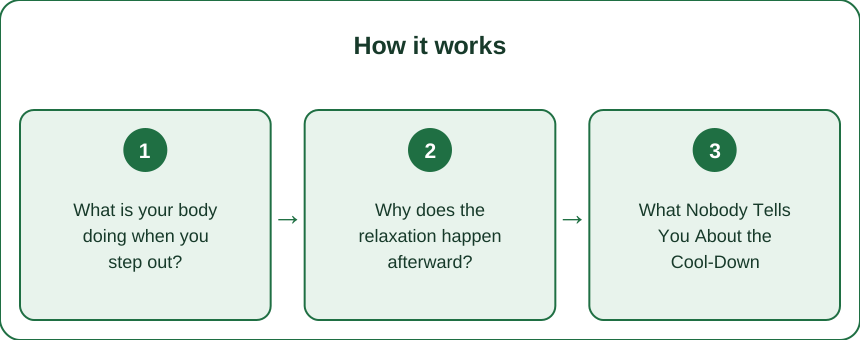
What is your body doing when you step out?
Still working, quite hard, on returning to baseline.
During a sauna session, your core temperature rises, your heart rate climbs to levels comparable with moderate exercise, and your blood vessels near the skin dilate substantially to shed heat. A large volume of blood shifts toward the periphery, and your body is sweating actively to cool itself.
When you step out into cooler air, none of that reverses instantly. Your core is still elevated. Your peripheral vessels are still dilated. You continue sweating for several minutes after leaving, because your core has not cooled yet even though your skin has.
This is why the post-sauna period has a specific character: you feel hot, then suddenly cool, and your heart rate takes several minutes to come down.
It also explains the dizziness people experience standing up. With blood pooled peripherally and vessels dilated, standing quickly means less blood returning to the heart and a transient drop in blood pressure to the brain. The sensation is orthostatic hypotension, and it is the most common adverse event associated with sauna use.
The cool-down matters because it is the period during which all of this resolves. Rushing it means dressing while still sweating, leaving with an elevated heart rate, and skipping the phase where your nervous system actually shifts.
Why does the relaxation happen afterward?
Because the parasympathetic rebound is a post-exposure phenomenon, not a during-exposure one.
During the heat exposure itself, your body is under sympathetic drive — heart rate up, cardiac output up, active thermoregulation. That is a stress response, and an appropriate one.
The characteristic sauna feeling — the heavy, calm, slightly floaty relaxation — comes after, when the sympathetic drive withdraws and parasympathetic activity increases. Heart rate variability studies of sauna bathing generally show the parasympathetic shift emerging in the recovery period rather than during heating.
This has a direct practical implication. If you leave immediately, you may leave before the effect you came for. People who report that sauna does not relax them frequently describe a routine of sauna, shower, dress, leave, all within a few minutes.
There is a temperature element too. The subjective sense of relief depends on your core temperature coming down, which lags well behind your skin cooling. A few minutes of sitting quietly lets core temperature actually fall, which is when the shift registers.
The traditional Finnish practice reflects this. The cycle is heat, cool, rest, repeat — and the rest phase is not treated as an interval between the real parts. It is one of the parts.
What Nobody Tells You About the Cool-Down
You keep sweating after you leave, sometimes for five to ten minutes. Dressing immediately means putting clothes on over active sweating, which is uncomfortable and is why people arrive home still feeling clammy.
Standing up fast is the actual risk of sauna use. Not the heat itself for most healthy people, but the blood pressure drop on standing. Sit for thirty seconds before you stand, and stand slowly.
A cold plunge is a different intervention, not a faster cool-down. Cold exposure produces its own strong sympathetic response — it does not gently return you to baseline. If your goal is the relaxed parasympathetic state, an aggressive cold plunge immediately after works against it. If your goal is the contrast experience, that is a legitimate and different aim.
Rehydration is easier to get wrong than people think. You lose both water and electrolytes through sweat. Drinking a large volume of plain water quickly after significant sweating is not ideal; steady intake with some sodium is better.
The benefits people cite from sauna research come from regular, consistent use — the cardiovascular findings in long-term studies relate to frequency over years. A single well-executed session is pleasant; the interesting effects are about habit.
The cool-down is where you notice how the session actually went. Feeling genuinely unwell rather than pleasantly tired during the cool-down is information that the session was too long or too hot for you that day.
What should the ten minutes look like?
Simple, and mostly about not rushing.
Sit down immediately when you leave, before you do anything else. Not in a chair somewhere you have to walk to — right outside, on a bench. Thirty seconds seated before standing again handles the blood pressure risk.
Cool gradually rather than abruptly. A lukewarm or cool shower is ideal — cold enough to bring skin temperature down, not so cold that it triggers a strong stress response. If you want a genuine cold plunge, do it as a deliberate contrast round rather than as the end of the session.
Let the sweating finish before dressing. Sit in a towel until your skin stays dry for a minute or two. This is the step everyone skips and the one that determines whether you leave feeling clean or clammy.
Drink steadily, with some electrolytes. Water plus something containing sodium, or an electrolyte drink. Sipping over ten minutes beats downing a large bottle.
Stay off your phone if you can. The parasympathetic shift is a nervous system state, and it responds to what you are doing. Ten quiet minutes produce a different result than ten minutes of scrolling.
A seasonal note. As outdoor temperatures drop through autumn, the contrast between the sauna and the changing room grows, which makes the cool-down both more pleasant and more important. It also means the walk to the car matters — going outside into genuinely cool air with damp hair and a recently elevated core temperature is how people end up chilled after a session that felt great.
This is general information, not medical advice. Sauna use is not appropriate for everyone — those with cardiovascular conditions, low blood pressure, or who are pregnant should speak with a doctor first. Stop and leave if you feel unwell, and never use a sauna after drinking alcohol.
FAQ: Post-Sauna Questions, Answered
How long should the cool-down be?
Ten to fifteen minutes is a reasonable default, and the real marker is that you have stopped sweating and your heart rate feels normal. If you are doing multiple rounds, a similar rest between rounds is standard practice.
Is a cold shower after the sauna good or bad?
Neither universally. A brief cool shower helps skin temperature and feels good. A hard cold plunge is a separate stimulus with its own effects, and it interrupts the relaxation response. Choose based on what you came for.
Why do I feel drained rather than relaxed?
Usually too long, too hot, or dehydrated going in. Sauna is a genuine physiological load, and there is such a thing as too much. Shorter sessions with proper cool-downs frequently feel better than longer ones without.
Should I eat before or after?
A light meal well before is fine; a heavy meal right before is not, since digestion and thermoregulation compete. Afterward, once you have rehydrated, eat normally.
TL;DR:
- Your body keeps working after you leave the sauna — still sweating, core still elevated, heart rate still coming down.
- The parasympathetic relaxation people go for emerges during recovery, not during heating, so leaving fast means leaving before the effect.
- Sit before standing, cool gradually, let the sweating finish before dressing, and rehydrate with some sodium.
- A cold plunge is a different stimulus, not a shortcut through the cool-down.
Next session, cut five minutes off the heat and add ten to the cool-down. Most people find the whole thing works better.
Keep Reading
This article is for general informational purposes only and is not medical advice. Always consult a qualified health professional for guidance specific to you.